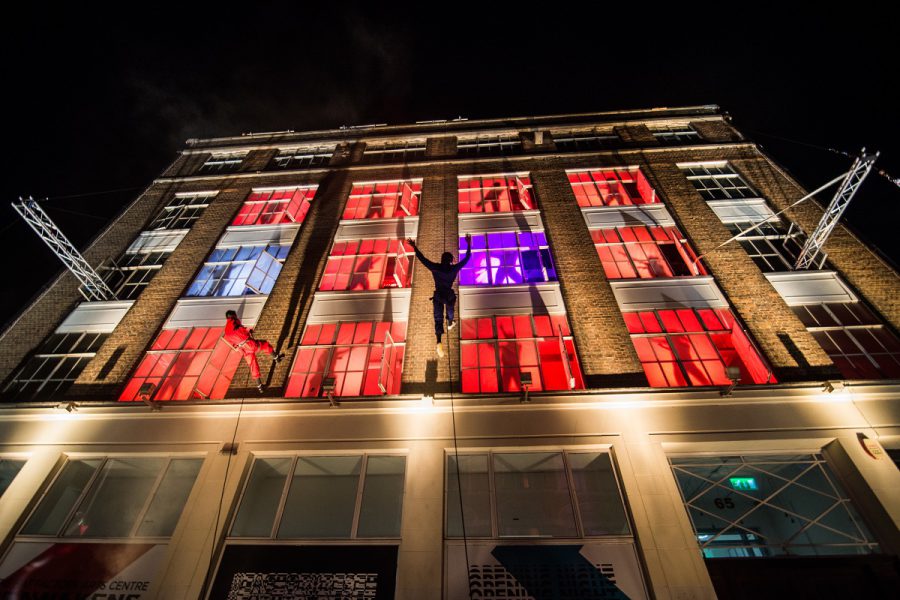
We believe playfulness and imagination can help reframe the challenges in our lives, find new solutions and imagine positive futures.
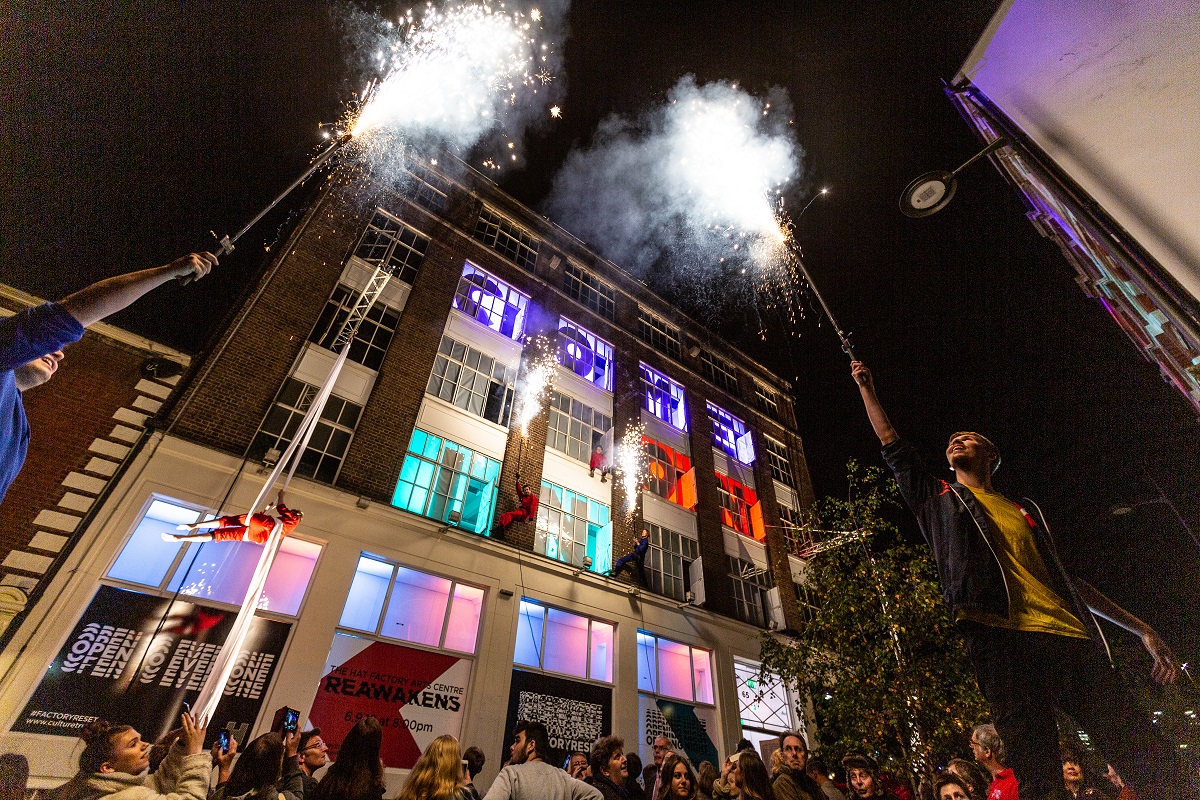
In our creative processes, we work with many different modes at once – physicality, movement, sound, visual spectacle, imagery objects and language – allowing a diverse range of perspectives to explore something complex together, and for different people to find different shades of meaning in our work.
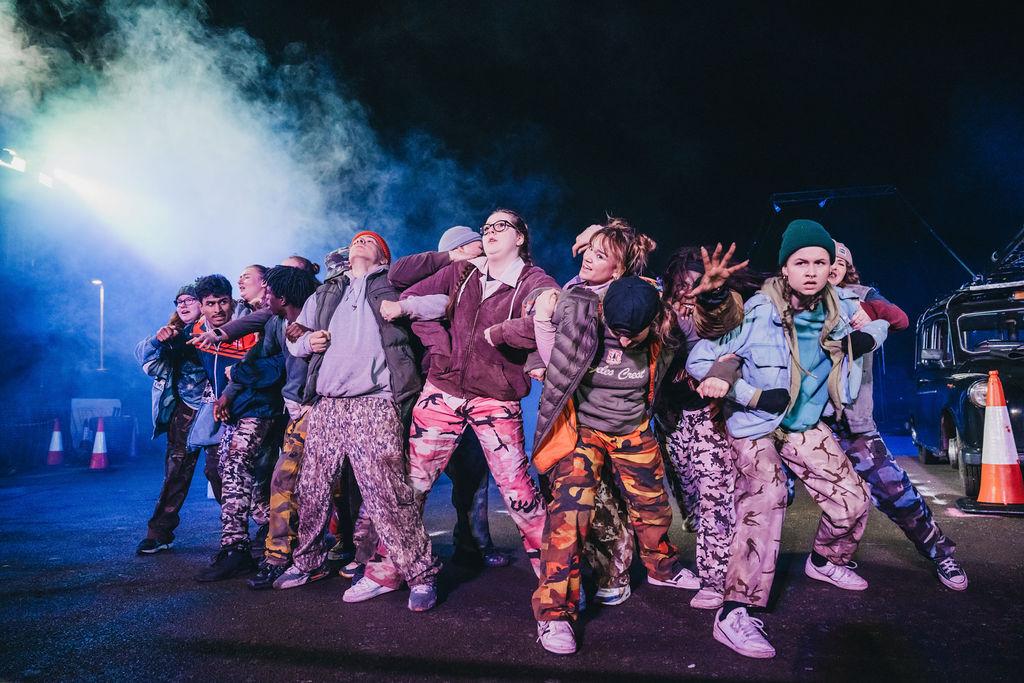
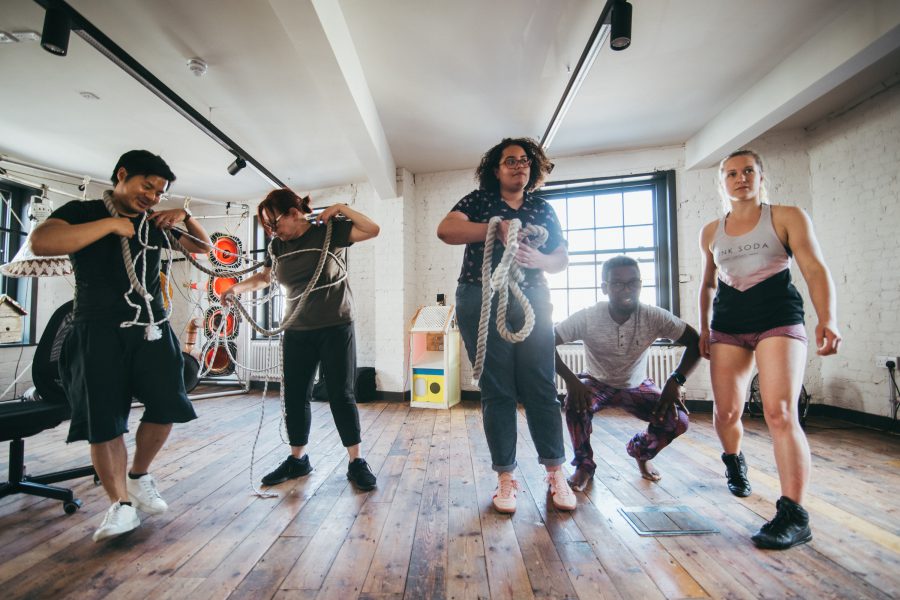
We believe in the power of the group – and that collaborative processes enable us to make something much bigger than the sum of its parts.

Our performances don’t start with a text: they start with a group of people. Together, through processes of improvisation  and play, we evolve a creative response to our shared stories, and to the tensions we see and feel in the world around us.

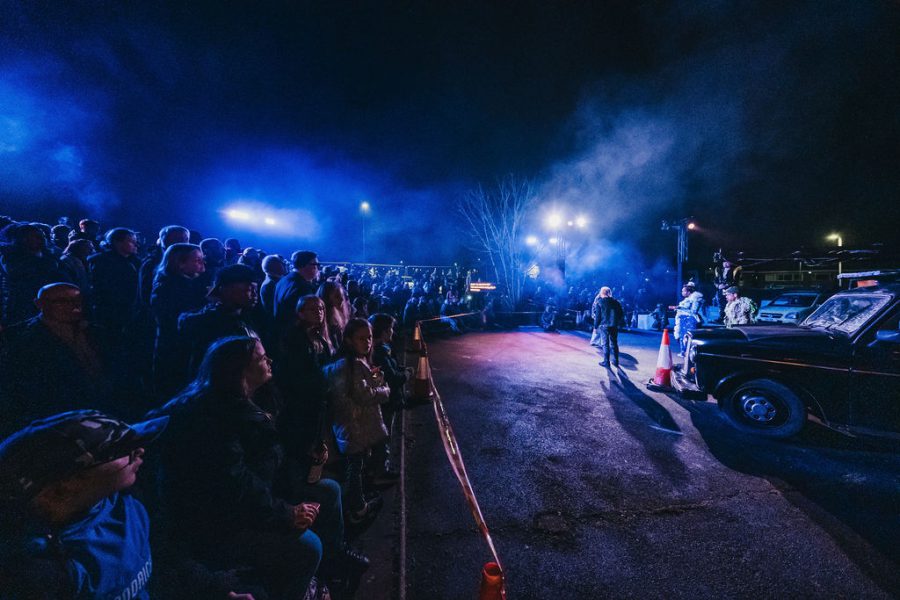
In our performances, we create atmospheres and experiences for the audience which are thrilling, surprising and memorable, which always feel ‘live’ and in the moment, where the unique reality of this audience, in this moment, right here is acknowledged and celebrated. Our shows are never finished until the audience completes them.
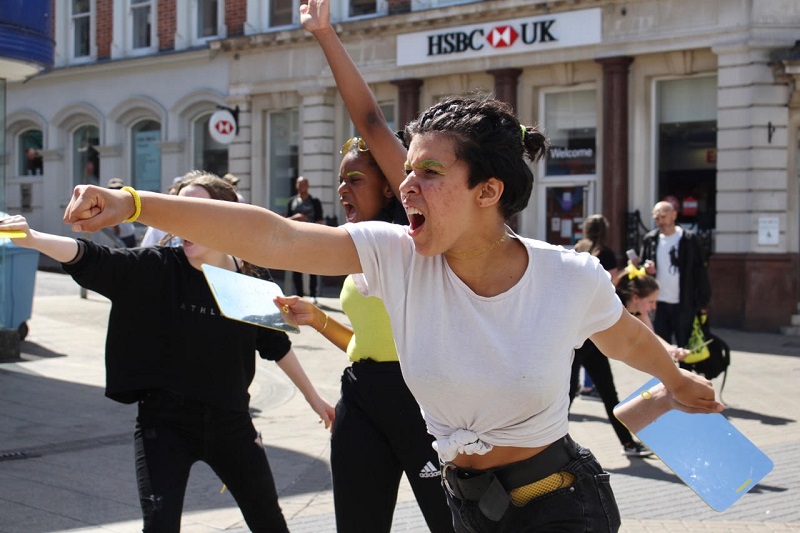
We believe that collective shared experiences in public places are hugely powerful, reshaping the way we see the world and supercharging our empathetic connection to each other.

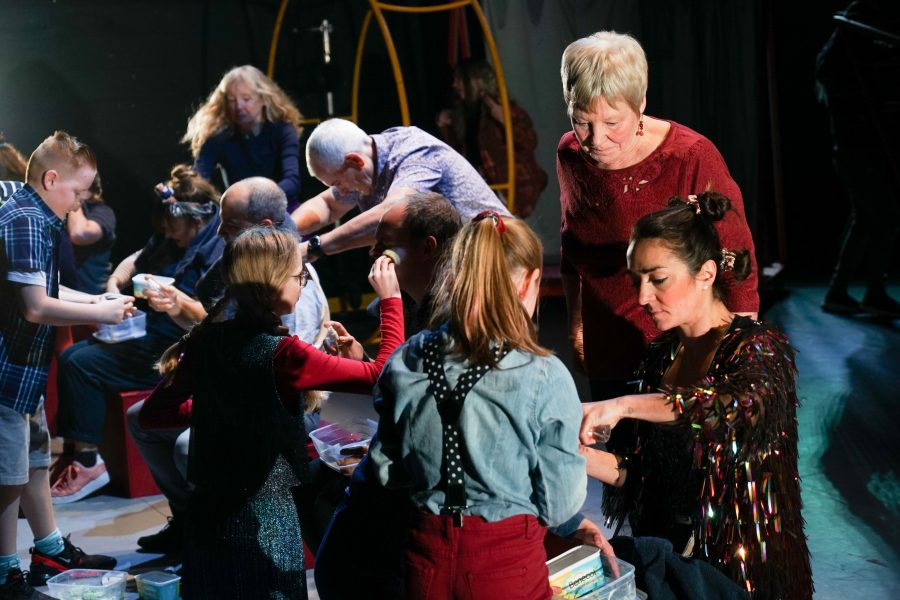
We also know the enormous impact that creative exploration can have inside a one-on-one therapeutic relationship – enabling people to find a sense of agency over their own stories and futures.
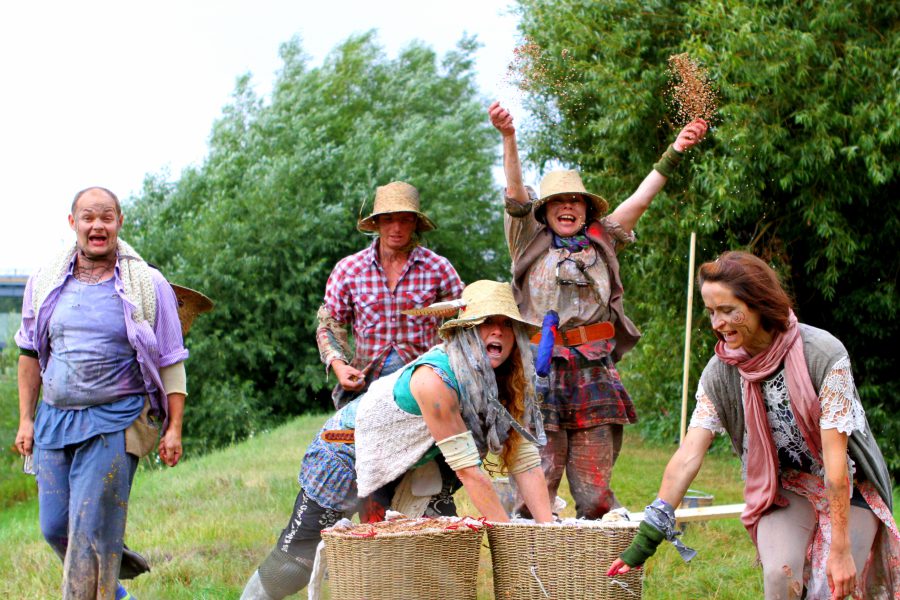
At the heart of our methodology is a sense of fun and a playfulness to hold complex stories with lightness. As we devise, we imagine new ways of being together and possible new futures. We make work where change can happen and be seen happening.
How did Tangled Feet start?

Tangled Feet formed in 2003 when the founding members of the company met, as friends, at university and started to make theatre together. We found a shared way of working and creating.  We made our first production, Catching Dust, as the final module of the Theatre Arts degree at Middlesex University. Later that year we restaged it at a fringe venue in London and then at Edinburgh Fringe Festival. We then went on to create other productions and over time began working with other emerging artists and graduates from other courses and grew into a bigger ensemble with associate artists. From those first few years of the founding members creating together to working with our wider family of associate artists, we have a shared rehearsal and performance history that has, over time, built connection, meaning and trust.

How have you kept the company going?

Through the dedication and curiosity of the ensemble to keep exploring, playing and making new work to take to new audiences. This developed over those first few years, as the company built momentum slowly. We toured our first show Catching Dust to a few UK locations and then, working part time, we made our second show, Lost Property over a year. In those early days everyone was working in other paid work and Tangled Feet work was not paid. We met on Tuesday evenings and Sundays to make the work. Part of this period was a commitment to an adventure, to friendship and to making something new. Our first Arts Council grant in 2005 and building a reputation at the Edinburgh fringe festival were key moments. As was creating more work alongside young people, growing the Dramatherapy offer and making work outdoors and site specifically. Over this time, we became more familiar with Arts Council policy, creating and working on funding bids and connecting our artistic ideas with a strategy and support/partnerships.

Where do you get your ideas from?

Our ideas grow from curiosity and change shape as we start to investigate them. The ideas we have always develop through play and discussion. We often don’t know exactly where we are headed at the start of a process and can be led as much by physical improvisation as by design elements or by audience relationship. Perhaps it starts with a question we want to ask our audience why is x? how does x? would it be interesting if x? Or a feeling we want to elicit. We rarely begin with a clear sense of the end show or project or a lightning bolt moment of inspiration where the show exists in someone’s head. We’re interested in how people relate to each other and how empathetic connections can bring us all closer together. Also in place, relationships, change, community, tension and hope. Our ideas can come from a variety of places – things we’ve experienced ourselves, things we see happening in the communities around us, something we want to illuminate to the world, a change we want to see. Sometimes the place or space we will in perform is the inspiration of the idea or a theme we have been given (see case studies).

How do you devise and structure work?

We work through a huge amount of research, conversation, exploration, reflection, listening, improvisation and play. We usually work in periods of development where we are not rehearsing a play but exploring where the edge of the idea is – what is useful for telling the story and what is not? Often exploring an idea though play and improvisation and then layering on other elements, whether this is music, words, set or props. Through play and collaboration, we are searching for original ways to share our ideas, communicating verbally and non-verbally. We improvise a lot with objects, design, sound, staging, the audience and each other.  We ask a lot of questions as we make the work and actively listen to one another…who or what is this about? Who is this for? How will the audience meet it? How will they feel at the end? What question does our work answer? What questions do we want to leave our audience with? The process is not linear, we revisit ideas and reshape, things don’t work, we change our minds about the answers, add and edit. You make a lot of work that ends up being part of the process but not the performance and it is essential not to be precious about what stays and goes, you have to let things go. The work starts to have a form, to be structured. We build out from what, we feel, are the most foundational parts of our idea that have to be clear to an audience. We then use concepts like character, events, intentions and rhythm to structure the work. There is a sense of fun and adventure as we move through the creation process, it is mostly exploring, failure, reshaping and play!

The way we make our therapeutic theatre pieces involve more specific key elements and you can read about the process of making Belongings in this article by Catherine Love.

What do you do when you feel creatively stuck in a process?

Time is important when you get stuck. Taking a break from the process and then approaching it from a new angle is always useful and sometimes essential. If you feel stuck maybe something isn’t working or there aren’t enough ideas in the space yet to see new ways forward. It’s important to be honest about being stuck, to be transparent as a creative team and to talk it through. We discuss and share problems, get an outside eye, listen actively and re-align around the central question we are asking. We also try and re-frame things – try it without words or with words, add a layer, do it in a new order, add new characters or events. You could try changing the audience dynamic, setting or add new design ideas. Maybe trying out the ideas in a new, contrasting space. You are probably not completely stuck but just need some time, new momentum, to reshape old ideas or change the focus – it is all part of the process, making original work is challenging and all devised shows have these moments.

What is the role of the space/audience/form of the work?

The space we are in and how the audience interact with it plays a huge part in the work we make. The creation of our work can often happen in one of two ways – we ask ourselves what is the most interesting way an audience can experience this theme in the work and what environment will allow them to access it fully? In that way the form and place reveal itself – this has been the case for us on shows like Boots on the Ground, That Parking Show, Need A Little Help. Alternatively for site specific work or work that is participatory the starting point is the space we are performing in. The space will also affect our relationship with the audience – who are they? How will they experience the work? What is the feeling we want to evoke or provoke in them? In some of our work the audience will have a role and will be encouraged to participate, affecting how the show is experienced. For examples of this see Factory Reset, Emergency, Pop Up Shop, Mirror Sky and Rave New World

What do you mean by co-creation and how does that work?

When we talk about co-creation we mean several things. Almost all our work is co-created in some way through collaboration, in a shared making space for many voices creating the work (not a sole playwright). The way we work and participate with audiences and communities is often visible in our work. We have co-created work with participants (non-paid performers), valuing their ideas and their creativity and inviting them into the process where they can influence the narrative and form. We have also made work through collaborations with young people, in educational settings and with youth theatres. In our residency work in schools, we are led by the ideas and themes that the young people want to explore. We introduce them to our style of creating and our ensemble methodologies of play and exploration, then use these to tell the stories they want to tell and to highlight the things that are important to them. We encourage them to use their words and forms of expression, for them to have authorship and ownership of the work we make together. For co-creation to happen it is essential that there is equity in the making space and that everyone is part of the ensemble.

For our therapeutic theatre work we work with Creative Advisors as Co-Creators. These Creative Advisors are young people with lived experience of the theme we are exploring and they help shape the narrative and form through workshops, rehearsals, feedback and reflection (see Need A Little Help, Butterflies, Belongings and (insert Polka show name).

You can read more about our co-creation process on Belongings in this article by Catherine Love.

What have been the biggest challenges on the way?

The biggest creative challenges have been keeping the work varied, each show different to the last, bringing fresh perspectives and new voices to the creation process, making outdoor work in challenging conditions and with lots of parameters. Understanding and learning about the work of other organisations and other sectors, whose work intersects with ours. Building meaningful participation programmes and involvement in shows, growing long lasting relationships with educational settings and connecting our large Creative Therapies work with the creative projects.

Logistical challenges have been building a sustainable career and balancing the company ambition and need against the founding members and core team lives, freelance careers and ambitions (all of Tangled Feet core team work part time). Balancing the company’s growth and ambition with a constant need to raise money and apply for grants. Learning about new processes and new approaches to creating. Learning constantly and adapting to new roles, learning how to be not just artists but finance, fundraising, strategy and communication experts.